
If you’ve ever wondered how plastic bottles are really made, you’ve probably come across the term PET preform injection mold. It sounds technical, but understanding it can dramatically improve how you plan and optimize your manufacturing process.
In this guide, we’ll break it all down in clear, practical terms—based on real shop-floor experience at IVIROBOT
What Is a PET Preform Injection Mold?
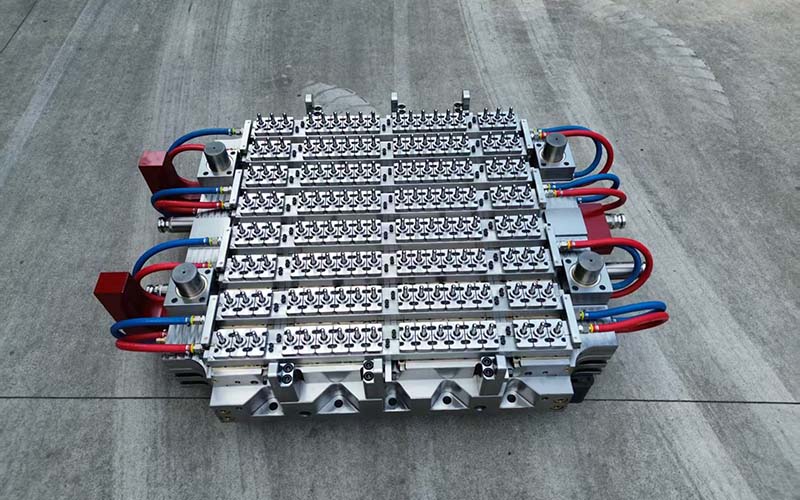
A PET preform injection mold is a specialized injection mold used to produce PET (Polyethylene Terephthalate) preforms. These preforms look like small, thick-walled plastic test tubes with a fully finished, threaded neck.
Basic process:
- PET resin pellets are dried and melted.
- Molten PET is injected into the steel preform mold cavities.
- The mold cools and solidifies the plastic into precise preform shapes.
- These preforms are later reheated and blown into their final bottle or container shapes via stretch blow molding.
In other words, the preform injection mold is the starting point for most PET bottles and jars used in beverages, food, household, and personal care packaging.
Contents
- What is PET in injection molding?
- What is a preform mold?
- What is PET preform used for?
- What are the different types of injection molds?
- Conclusion
What Is PET in Injection Molding?
If you’re active in packaging or plastics, you’ve definitely heard PET mentioned. But what exactly is it, and why is it so widely used in injection molding?
PET (Polyethylene Terephthalate) is a thermoplastic polyester highly valued for:
- Excellent clarity and surface gloss
- High strength and stiffness
- Good barrier properties (especially against moisture and gases)
- Recyclability (commonly labeled with resin code #1)
- Reliable processability in injection molding
In injection molding, PET is melted and injected into molds to create preforms and other parts—especially where visual appeal, product protection, and recyclability matter.
Why PET Is a Top Choice for Injection Molding
At IVIROBOT, we’ve run countless materials through our injection machines, and PET stands out for several reasons:
1. Clarity and Gloss
Those crystal-clear water and beverage bottles you see on store shelves? That’s usually PET.
- Provides high transparency and shine
- Makes products look premium and clean
- Directly influences consumer perception and purchase decisions
If your brand depends on visual appeal—like colorful juices or clear beverages—PET is often the best choice.
2. Strength, Stiffness, and Durability
PET is not just pretty; it’s tough.
- Withstands internal pressure from carbonated drinks
- Resists punctures and impact
- Reduces breakage during shipping and handling
We worked with Eric, a project manager from a sports drink brand, who needed a lightweight yet tough bottle that could survive daily use and being tossed into gym bags. PET delivered the perfect balance of weight and durability.
3. Excellent Barrier Properties
For food and beverages, barrier performance is critical.
- PET helps keep oxygen out
- Maintains carbonation and product freshness
- Extends shelf life and preserves taste and quality
Nobody wants a flat soda or stale drink—PET plays a huge role in preventing that.
4. Recyclability and Sustainability
In a world increasingly focused on sustainability:
- PET is one of the most recycled plastics globally
- Identified with resin code #1
- Fits well with closed-loop recycling systems
Many brands highlight PET’s recyclability as part of their environmental strategy.
5. Excellent Processability in Injection Molding
From a production perspective, PET is highly moldable:
- Flows well into complex mold geometries
- Supports high-cavitation molds (e.g., 32–144 cavities)
- Offers stable, repeatable quality
At IVIROBOT, we’ve found PET relatively forgiving in the molding process, which helps us meet tight deadlines and maintain consistent preform quality at scale.
In short: PET is clear, strong, recyclable, and production-friendly—making it a true workhorse material in the injection molding and packaging industries.
What Is a Preform Mold?
Now that PET makes sense, let’s focus on the “preform mold” itself.
A preform mold is a specialized injection mold designed to produce PET preforms—intermediate parts that will later be stretch blow molded into the final bottle or container.
These preforms:
- Are tube-shaped, with a thick body
- Have a finished neck and thread area
- Serve as the first step in a two-stage manufacturing process:
- Injection molding of the preform
- Stretch blow molding into the final bottle/jar
Key Characteristics of a PET Preform Mold
From years of designing and building molds at IVIROBOT, here’s what truly defines a high-performing PET preform mold:
1. Multi-Cavity Design
To maximize efficiency, preform molds are typically high-cavitation:
- Common configurations: 32, 48, 72, 96, up to 144+ cavities
- Each injection cycle produces dozens of preforms
- Ideal for high-volume beverage and packaging production
Higher cavitation = more output per cycle = lower cost per part.
2. Hot Runner System
Most modern PET preform molds use a hot runner system, which:
- Keeps PET molten from the machine nozzle to each cavity
- Eliminates solid runners and sprues
- Minimizes material waste
- Improves cycle time and consistency
While hot runner systems are more complex and expensive than cold runners, the advantages in speed, efficiency, and part quality make them the standard for PET preforms.
3. High Precision in the Neck Finish
The neck finish is where the cap or closure will engage, so precision is non-negotiable:
- Threads must be accurate and repeatable
- Sealing surfaces must be perfectly formed
- Dimensional tolerance is extremely tight
Crucially, the neck finish is fully formed in the injection mold and does not change during the blow molding process. As Zheng often emphasizes in his packaging projects, cap fit and seal integrity are absolutely critical for product performance and safety.
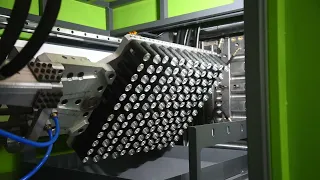
4. Optimized Cooling System
Efficient cooling design is essential for:
- Shorter cycle times
- Dimensionally stable, stress-free preforms
- Higher hourly output and lower cost per unit
At IVIROBOT, a major part of preform mold engineering is dedicated to cooling channel layout optimization, ensuring fast, even heat removal across all cavities.
5. High-Quality Tool Steel and Robust Construction
Preform molds are long-term capital assets that must endure:
- High injection pressures
- Repeated thermal cycling
- Continuous production over millions of cycles
That’s why they’re typically built from hardened, high-grade tool steels, with wear-resistant components and precision machining.
Bottom line: A preform mold isn’t just any mold—it’s a high-precision, high-cavitation, long-life tool engineered to be the starting point for billions of PET bottles and jars.
What Is PET Preform Used For?
So, why do we go through the trouble of making preforms instead of molding bottles directly?
Because PET preforms are:
- Compact
- Easy to transport and store
- Ideal for high-speed stretch blow molding near the filling line
The Journey of a PET Preform
Let’s quickly walk through the full lifecycle of a PET preform:
- Creation (Injection Molding)
- PET resin is melted and injected into the preform mold.
- Neck and thread are fully formed; the body is thick and compact.
- Reheating (Preform Heating)
- Preforms are sent through an infrared heating oven.
- The body is heated to a controlled temperature;
- The neck is kept cooler to stay dimensionally stable.
- Stretch Blow Molding
- The heated preform is transferred into a bottle-shaped blow mold.
- A stretch rod extends the preform lengthwise.
- High-pressure air expands the preform radially like a balloon.
- This biaxial orientation (axial + radial stretching) gives PET bottles:
- High strength
- Excellent clarity
- Lightweight performance
From a small test-tube-like preform to a full-size bottle—this transformation is fast, efficient, and highly repeatable.
Common Applications of PET Preforms
PET preforms are the starting point for a huge variety of products:
1. Beverage Bottles
The largest application by far:
- Water bottles
- Carbonated soft drinks (CSDs)
- Juices and nectars
- Sports drinks and energy drinks
- Iced teas and flavored beverages
We once supported Zheng and his team on a new organic juice line. They needed bottles that were:
- Visually clear to showcase natural colors
- Strong enough for handling and transport
- Compatible with existing filling lines
PET preforms and stretch blow molding were the perfect fit.
2. Food Containers
Many food jars and containers start as PET preforms:
- Peanut butter and spreads
- Sauces and dressings
- Spices and condiments jars
- Certain cooking oils and edible products
PET’s barrier and clarity help maintain freshness while making the product visually appealing on the shelf.
3. Household and Personal Care Products
PET preforms are used for bottles and containers for:
- Liquid cleaners and detergents
- Dishwashing liquids
- Shampoos and conditioners
- Body wash, lotions, and other personal care products
PET provides a balance of appearance, strength, and chemical resistance.
4. Pharmaceuticals and Cosmetics
In some cases, PET preforms are used to produce:
- Pill and tablet bottles
- Liquid medication bottles
- Cosmetic containers and jars
Here, PET’s cleanliness, clarity, and barrier performance are again big advantages.
Logistics and Efficiency Benefits
One of the biggest reasons preforms are popular is logistics efficiency:
- Preforms are small and dense, easy to ship in bulk.
- They take up far less space than empty bottles.
- Bottles are blown just-in-time at or near the filling plant.
This drastically reduces:
- Shipping costs
- Warehouse space requirements
- Risk of damage to finished bottles during transport
All of this efficiency starts with a precise PET preform, produced in a well-engineered mold—exactly the kind of tooling IVIROBOT specializes in.
What Are the Different Types of Injection Molds?
While PET preform molds are highly specialized, they are only one category in the broader world of injection molds. To understand where they fit, it helps to know the main mold types used across plastics manufacturing.
Below are some key types, categorized by runner system and mold structure.
1. By Runner System
Cold Runner Molds
In cold runner molds:
- The runner is a machined channel in the mold plate.
- Molten plastic flows from the nozzle through the runner to the cavities.
- The runner solidifies along with the part.
- The runner is ejected with the part and must be removed, often reground and reused.
Pros:
- Lower initial mold cost
- Simpler design and easier maintenance
Cons:
- More material waste (solidified runners)
- Longer cycle times (runner must cool)
- Potential quality variation if too much regrind is used
Hot Runner Molds
In hot runner molds:
- The runner system is heated and insulated.
- Plastic remains molten all the way to the gate.
- No solid runner is ejected with the part.
Pros:
- Minimal or no material waste (no runners)
- Faster cycle times (no runner cooling)
- Better part consistency
- Greater flexibility in gate location
Cons:
- Higher initial mold cost
- More complex design and controls
- More demanding maintenance
For high-volume applications like PET preforms, hot runner molds are generally the preferred solution due to their overall efficiency.
2. By Mold Plate Design
Two-Plate Molds
The most common and basic design:
- Mold splits into two halves at a single parting line.
- The runner system (if cold) lies on that parting line.
- Simple, robust, and suitable for a wide range of parts.
Three-Plate Molds
Three-plate molds add an extra plate to create two parting lines:
- Often used to enable pin-point gating or gates located away from the main parting line.
- The runner system can be separated from the parts and ejected independently.
This design offers more flexibility in gate placement, which can improve aesthetics and part performance.
3. Specialized Mold Types
Stack Molds
Stack molds increase productivity by having multiple mold levels:
- Two or more parting surfaces stacked front-to-back.
- Mold opens and closes as a unit.
- Effectively increases output without needing a much larger machine.
Commonly used for:
- Lids
- Shallow containers
- High-volume, relatively flat parts
Family Molds
Family molds produce different parts in the same cycle:
- Multiple cavities for different (but related) components
- All parts are molded from the same material in one shot
Useful when you need:
- All components of an assembly (e.g., front and back housings of a device)
- Matched color and material in a single production run
However, they can be challenging to design:
- Different cavity sizes and flow paths must be carefully balanced
- Mold flow analysis is often required to ensure uniform filling
Conclusion
A PET preform injection mold is far more than just a block of steel—it’s a high-precision, engineering-intensive tool at the heart of modern packaging.
In this guide, we’ve covered:
- What PET is in injection molding and why it’s so widely used
- What a preform mold is, and the engineering behind its design
- How PET preforms are used and transformed into bottles via stretch blow molding
- The different types of injection molds, and where PET preform molds fit in
From beverage bottles and food jars to household and personal care packaging, billions of containers begin life as PET preforms made in molds like those we build at IVIROBOT.
By understanding how PET, preforms, and injection molds work together, you’ll be far better equipped to:
- Specify the right tooling
- Optimize production
- Control costs and quality
- Truly master molding right in your own projects.
If you are interested in the PET preform production process or the external cooling system for PET preforms, you are welcome to contact our experts.