
Collaborative robots — often called cobots — are rapidly becoming a standard feature in factories around the world. Unlike traditional industrial robots that operate behind fences and away from people, collaborative robots are specifically designed to work with humans, not just near them.
By sharing tasks with workers, collaborative robots help complete jobs more efficiently, more safely, and often at a lower overall cost. Below, we’ll look at how collaborative robots transform production processes, improve workplace safety, and make automation more accessible to factories of all sizes.
Flexible Production with Collaborative Robots
One of the defining strengths of collaborative robots is their ability to be quickly redeployed from one task to another. Traditional robots are usually programmed for a narrow range of operations and can be time‑consuming to reconfigure. In contrast, collaborative robots can switch from one application to a completely different one with relative ease.
This flexibility allows collaborative robots to support humans across a wide variety of projects. When production requirements change — for example, when a factory needs to start manufacturing a new product — IVIROBOTS collaborative robots can be reprogrammed for new tasks without shutting down the line.
As a result:
- Production performance can be continuously optimized
- Factories remain highly responsive to changing customer demands
- Downtime due to reconfiguration is greatly reduced
Collaborative robots effectively turn rigid production lines into adaptable, modular systems.
Collaborative Robots Working Side by Side with Humans
Collaborative robots are built to operate safely right next to human workers. This close cooperation is one of the biggest differences between collaborative robots and conventional industrial robots.
Collaborative robots can take on tasks that are:
- Tedious and repetitive
- Physically demanding
- Potentially hazardous or ergonomically risky
By delegating such work to collaborative robots, human operators can focus on higher‑value activities that require:
- Problem‑solving
- Fine motor skills
- Creativity and expert judgment
IVIROBOTS collaborative robots are designed with intuitive interfaces so that workers can learn how to interact with and control them with minimal training. This makes day‑to‑day collaboration smoother and more natural, leading to:
- Faster production
- Higher consistency and quality
- A less physically stressful and more satisfying work environment
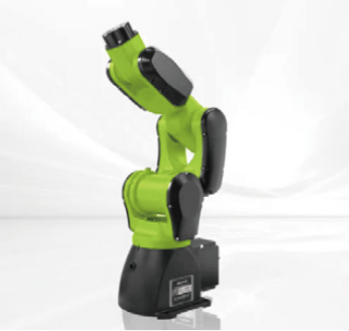
Safer Workplaces with Collaborative Robots
In any manufacturing environment full of moving machinery, safety is critical. Traditional industrial robots are often kept inside cages to prevent accidental contact with workers. Collaborative robots, however, are engineered with built‑in safety functions that allow them to operate in close proximity to humans.
Common safety features of collaborative robots include:
- Force and speed limits
- Collision detection
- Safe stop functions
These capabilities allow collaborative robots to share workspace with people without physical barriers. Workers feel more secure and confident when they know the robot is designed to avoid causing harm.
When tasks are carried out by both humans and collaborative robots in the same area:
- The likelihood of work‑related injuries is reduced
- Risk in surrounding zones is minimized
- Overall workplace safety culture is strengthened
Protecting everyone on the floor is essential to building a sustainable, healthy manufacturing environment — and collaborative robots are a key part of that effort.
Collaborative Robots Adapting to Changing Tasks
Manufacturing today is fast‑moving. Orders shift, product variants increase, and customers expect rapid turnaround. In this context, the ability of collaborative robots to adapt quickly to new tasks is a major advantage.
Traditional industrial robots often require:
- Extensive reprogramming
- Mechanical adjustments
- Significant downtime during changeovers
Collaborative robots, on the other hand, are designed for:
- Quick task switching
- Simplified programming
- Minimal interruption to production
IVIROBOTS collaborative robots help factories stay agile by making it easy to reassign robots as needs evolve. Facilities equipped with such flexible automation can:
- React faster to market trends
- Launch new products more quickly
- Maintain a more adaptive and resilient production base
In short, collaborative robots support a manufacturing environment that is built to change rather than resist it.
Collaborative Robots: Simple, Affordable, and Easy to Deploy
Another reason collaborative robots are gaining popularity is that they are often more economical than traditional industrial robots — not only in purchase price, but also in integration and ongoing use.
Key cost advantages of collaborative robots include:
- Lower initial investment compared to many heavy industrial systems
- Reduced need for complex guarding and fencing
- Faster deployment and shorter integration times
- Less disruption when added to existing production lines
IVIROBOTS offers collaborative robots that are specifically engineered to be:
- Affordable for a wide range of businesses
- Easy to install across different industries
- Straightforward to operate and maintain
With collaborative robots, factories can boost efficiency and throughput without massive capital expenditures. This makes advanced automation accessible not only to large corporations, but also to small and medium‑sized manufacturers.
Conclusion: How Collaborative Robots Are Shaping the Future of Manufacturing
Collaborative robots, like those produced by IVIROBOTS, deliver a set of clear advantages over traditional industrial robots:
- Greater flexibility in production processes
- Improved safety for workers on the shop floor
- True collaboration between humans and machines
- Faster adaptation to evolving tasks and product lines
- Lower overall cost and easier implementation
As factories continue to adopt collaborative robots, the manufacturing landscape is being transformed. Collaborative robots are emerging as a central technology for the next generation of smart, human‑centric production.
Children and students will increasingly read real‑world examples of collaborative robots in textbooks and media, as cobots become everyday tools in modern industry. All eyes are on collaborative robots — and it’s already clear that these machines are changing not only how factories operate, but also how automation fits into our daily lives.