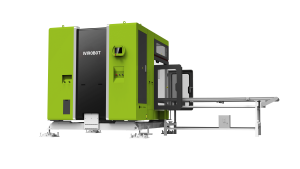
In mold labeling technology (IML) is rapidly becoming one of the most important innovations in the plastic packaging and labeling industry. Although IML is relatively new compared with traditional printing and labeling methods, its production capacity and market adoption are increasing day by day. Thanks to its efficiency, visual quality, and automation compatibility, in mold labeling technology is now a preferred solution for many brands and plastic packaging manufacturers.
In this article, we’ll explain what in mold labeling technology is, how it works, its key components, and the main advantages of IML packaging.
What Is In Mold Labeling Technology?
In mold labeling technology (IML) is a process where a pre‑printed plastic film—usually polypropylene (PP)—is placed inside an injection mold before plastic injection starts. The film is printed in advance, cut into the exact shape of the final product, and positioned precisely in the mold cavity.
Then, molten PP is injected into the mold. During the molding and cooling phase, the plastic fuses with the label, creating a finished product that comes out of the mold already decorated. This integrated process is known as in mold labeling.
With in mold labeling technology, manufacturers can:
- Label plastic packaging quickly and efficiently
- Produce colorful, high‑resolution, high‑quality packaging with a single label and a single process
- Eliminate separate post‑molding labeling steps
Why In Mold Labeling Technology Is Changing Plastic Packaging
In mold labeling technology is considered one of the latest and most impactful developments in the plastic packaging industry. Traditional methods such as offset printing on plastic surfaces are increasingly being replaced by IML systems, especially for brands seeking premium appearance, durability, and high efficiency.
By integrating decoration into the molding process, in mold labeling technology:
- Shortens the overall production chain
- Reduces handling and separate labeling operations
- Improves consistency and repeatability in mass production
How an In Mold Labeling Robot Works
A key part of modern in mold labeling technology is the IML robot, an automation system designed specifically for plastic packaging production.
Basic Workflow of an In Mold Labeling Robot
- Label Pickup
The IML label is picked up from the label magazine unit by the label transfer unit. - Label Placement on Adhesion Arm
The transfer unit places the label onto the adhesion arm (or vacuum arm), which securely holds the label. - Robot Arm Positions the Label in the Mold
The main robotic arm moves through the injection unit and accurately places the label inside the injection mold cavity. - Injection and Molding
Molten polypropylene (PP) is injected into the mold. During cooling, the label and plastic bond permanently. - Product Removal and Stacking
The finished labeled product is picked up from the other side.
After leaving the mold area, the robot arm returns to its reference position.
The product picking unit places the finished part onto the stacking unit, and the product is then transferred and stacked on the conveyor.
Main Components of an In Mold Labeling (IML) Robot
In mold labeling technology relies on several coordinated automation units:
- Label magazine unit – Stores stacks of pre‑printed IML labels
- Label transfer unit – Picks labels from the magazine and transfers them to the adhesion arm
- Main robotic arm – Moves labels into the mold and removes finished products
- Main robotic axis – Provides precise movement and positioning of the robot arm
- Stacking unit – Receives finished parts and arranges them for packaging or further handling
- Conveyor – Transports stacked products to the next production step
This automation setup allows in mold labeling technology to run fast, precise, and highly repeatable production cycles.
Advantages of In Mold Labeling Technology in Packaging
In mold labeling technology offers multiple benefits in terms of material performance, sustainability, hygiene, cost efficiency, durability, and marketing impact.
1. Strong and Versatile PP Packaging
IML packaging typically uses PP (polypropylene), which provides:
- Resistance to mechanical stress
- Good performance under thermal and chemical exposure
- Durability against heat and fatigue
- Attractive moderate thickness and surface gloss
This makes in mold labeled PP packaging suitable for a wide range of applications, from food and household products to industrial containers.
2. 100% Recyclable and Eco‑Friendly
In mold labeling technology supports sustainability:
- 100% recyclable materials are used in PP at each manufacturing step
- Label and container are usually made from the same material (PP)
- No extra adhesives or different label substrates are needed
As a result, the entire IML package can be recycled more easily, making in mold labeling technology an eco‑friendly packaging solution.
3. Hygienic, Contact‑Free Production
IML packaging is typically manufactured:
- With high‑technology, fast and precise IML robot systems
- In custom, controlled facilities designed for automation
- Without direct human contact during labeling and molding
By minimizing manual handling, in mold labeling technology enhances hygiene standards, which is especially important for food, cosmetics, and healthcare-related packaging.
4. Higher Efficiency and Lower Overall Cost
Compared with packaging products that are printed or labeled in separate processes, in mold labeling technology can:
- Reduce total manufacturing time
- Lower labor and logistics costs
- Simplify process flow through well‑planned production management
When combined with professional design and engineering, in mold labeling technology delivers efficient, large‑scale production with a competitive cost per unit.
5. Enhanced Durability
Because the label and packaging are bonded during molding, the resulting IML products have:
- Strong adhesion between label and container
- Improved scratch and wear resistance
- Better resistance to peeling, bubbling, or wrinkling
This high durability helps maintain branding, information, and appearance over the entire life of the product.
6. Superior Visual Impact and Sales Performance
In mold labeling technology allows for:
- High‑quality, high‑resolution images
- Multi‑colored, photo‑realistic graphics in a single process
- Full‑coverage decoration that stands out on the shelf
These premium visuals help IML packaging attract customer attention and can have a positive effect on sales and brand perception.
7. One of the Fastest and Most Efficient Labeling Methods
With multi‑coloured, high‑quality printing achieved in a single in mold labeling procedure, IML is among the fastest and most efficient packaging technologies for plastic package labeling. It combines molding and labeling into one integrated step, reducing complexity while improving quality.
Why In Mold Labeling Technology Matters for Modern Packaging
As brands and manufacturers look for ways to improve sustainability, automation, visual quality, and cost control, in mold labeling technology offers a powerful answer. By integrating label and container into one production step, IML:
- Streamlines manufacturing
- Supports recycling and eco‑friendly goals
- Delivers premium, durable graphics
- Scales effectively with automation and robotics
For businesses in the plastic packaging industry, adopting in mold labeling technology can be a strategic move to stay competitive, efficient, and visually distinctive in a demanding market.