
In mold labeling (IML) is becoming the preferred solution for brands that want high‑quality, durable, and visually striking plastic packaging. Whether you produce food containers, household product packaging, or cosmetic jars, in mold labeling can greatly enhance both appearance and efficiency.
Below is a complete, SEO‑optimized introduction to in mold labeling, including what IML is, how the in mold labeling injection process works, its key advantages, and how an in mold labeling machine fits into a fully automatic production line.
What Is In Mold Labeling (IML)?
In mold labeling (IML) is a process in which a pre‑printed label is placed inside the mold before injection molding. When the plastic is injected, the molten material fuses with the label under high temperature and high pressure. After cooling, the label and the plastic product become a single integrated part.
As consumer expectations for the appearance and quality of plastic products continue to rise, traditional post‑printing and adhesive labeling methods increasingly fail to meet modern demands. In mold labeling technology was developed to solve these problems and is now widely used in injection molding for premium packaging and decorative plastic parts.
In Mold Labeling Injection Process
The in mold labeling injection process is mainly applied to plastic materials such as PP, PE, and PET, commonly used in food packaging, daily chemical containers, and industrial products.
The basic steps of the IML injection process are:
- Prepare printed IML labels
High‑quality labels are printed (usually on PP or other compatible films) with graphics, text, and branding. - Place the label in the mold cavity
Using an in mold labeling machine or robot, the printed label is accurately placed into the open mold cavity. The label is held in position by static electricity, vacuum, or mechanical positioning. - Injection molding
- The mold closes.
- Molten plastic is injected at high temperature and high pressure.
- The plastic flows behind the label and bonds with its back surface.
- Cooling and integration
During cooling, the label and plastic part fuse into one piece, forming an integrated decorative surface. - Open mold and eject part
When the mold opens, the finished part is ejected. At this point, a beautifully printed, fully decorated plastic product is already completed, with no need for additional labeling steps.
This is why in mold labeling is often chosen for high‑efficiency, fully automated injection molding production.
Key Advantages of In Mold Labeling
Using in mold labeling technology instead of traditional labeling or printing brings several significant benefits:
1. Superior Appearance and Brand Image
- IML provides high‑resolution, full‑color graphics with excellent gloss or matte effects.
- The label becomes part of the product surface, offering a premium and seamless look.
- Ideal for products requiring strong brand recognition and shelf appeal, such as food packaging, cosmetics, and household chemicals.
2. Labels That Do Not Fall Off, Wear, or Fade Easily
Because the label is integrated into the product during molding:
- It is much harder to peel off compared to adhesive labels.
- It has higher abrasion resistance and scratch resistance.
- It offers better color fastness and is less prone to fading in normal use.
For frequently handled products—like yogurt cups, ice cream tubs, paint buckets, and cleaning product bottles—this is a major advantage.
3. Safer and More Environmentally Friendly
In mold labeling is considered a more eco‑friendly and safe solution:
- IML labels are usually made of the same material as the container (for example, PP container + PP label), which makes recycling easier.
- No additional glue is required, reducing chemical residues on the product surface.
- Lower risk of label delamination and contamination during use or transport.
This is especially important in food packaging and products with strict safety and hygiene standards.
4. Supports Fully Automatic Production
With an in mold labeling machine or robot integrated into the injection molding system:
- Label placement, injection molding, and part ejection can be fully automated.
- No extra labeling step is required after molding, reducing labor costs.
- Production is faster, more stable, and more consistent, which helps lower overall unit cost.
For manufacturers pursuing high efficiency and mass production, in mold labeling is a powerful solution.
What Is an In Mold Labeling Machine?
An in mold labeling machine (IML robot or IML system) is the specialized automation equipment that:
- Picks up printed labels from a stack or magazine.
- Accurately places the labels into the mold cavity before each injection cycle.
- Synchronizes with the injection molding machine to ensure high‑speed and precise IML production.
Typically, an in mold labeling system includes:
- Robot or manipulator (top‑entry or side‑entry)
- Label magazine / label stacker
- Vacuum or electrostatic unit for label holding
- Control system integrated with the injection molding machine
With the right IML machine and IML injection molding setup, manufacturers can achieve high‑volume, consistent, and fully automatic in mold labeling production.
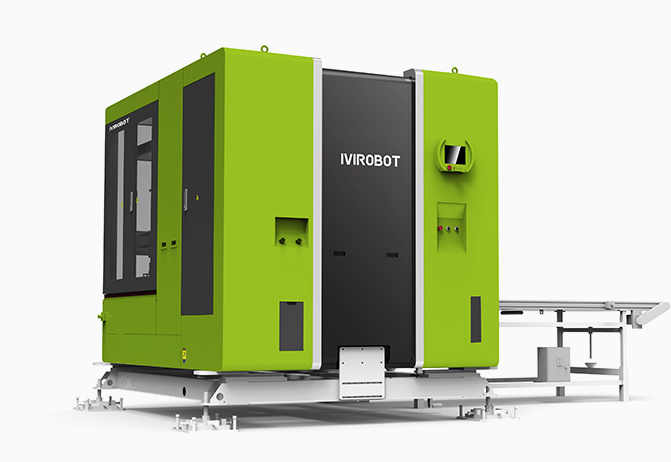
Looking for an In Mold Labeling Machine or IML Injection Solution?
If you are interested in:
- Buying an in mold labeling machine, or
- Setting up a complete in mold labeling injection molding line,
you are welcome to contact us for a detailed quotation and technical consultation.
Our professional team can help you choose:
- Suitable IML labels and materials
- Proper IML molds
- Matching IML robots and injection molding machines
so you can build a stable and efficient in mold labeling production system.
By partnering with us, you will benefit from our professional expertise, reliable equipment, and attentive service, and you will experience the full advantages that in mold labeling (IML) can bring to your products and your brand.