
Also known as IML labels, they are produced through a special in mold labeling process that embeds the label directly into the plastic packaging during manufacturing.
IVIROBOT, based in China, provides complete In Mold Labeling (IML) solutions to customers worldwide.
This article explains how in mold labels are produced and explores their main advantages, disadvantages, and applications across different industries.
What Are IML Labels and How Are They Made?
In mold labeling (IML) is a decoration method in which a pre‑printed, die‑cut label film is placed inside the injection mold before the plastic packaging is formed.
When the molten plastic is injected and cooled, the label and the package fuse into a single, fully decorated product. This eliminates the need for separate post‑production labeling and significantly enhances the appearance of the final packaging.
Because the label becomes part of the container wall, in mold labeling delivers a premium “no‑label look” and excellent durability.
Materials Used in In Mold Labeling
The in mold labeling process typically uses two main plastic materials:
- High-density polyethylene (HDPE)
- Polypropylene (PP)
These materials serve as the base for producing bright, long‑lasting labels that are structurally integrated into the finished product. The result is packaging that is both visually attractive and highly resistant to wear and tear.
In Mold Labeling Technologies
Modern in mold labeling can be implemented using three main forming technologies:
- Injection molding
- Blow molding
- Thermoforming
Regardless of the chosen method, the core principle of in mold labeling remains the same:
the label and the plastic package become one during the molding process.
1. In Mold Labeling with Injection Molding
Injection molding is the most common method used in in mold labeling. The process works as follows:
- A specially designed IML label is placed inside the open injection mold cavity and held in position by air pressure, vacuum, electrostatic charge, or mechanical fixtures.
- Plastic material is melted and injected into the mold cavity.
- While cooling, the molten plastic permanently bonds to the pre‑placed label.
The result is a plastic container decorated in a single step. Injection‑based in mold labeling offers:
- High design flexibility
- Competitive overall cost for medium and large runs
- Durable, scratch‑resistant label integration
2. In Mold Labeling with Blow Molding
In blow molding in mold labeling, the label is also placed into the mold cavity before forming:
- Plastic is heated and extruded or stretched into a hollow tube (parison).
- The tube is inserted into the mold.
- Compressed air is blown into the tube, inflating it until it fills the mold and takes its shape.
- Heat activates the label surface, bonding it to the plastic as the package cools.
This in mold labeling method is ideal for hollow containers such as bottles and canisters, where 360‑degree decoration and high durability are required.
3. In Mold Labeling with Thermoforming
Thermoforming in mold labeling is mainly used for rigid plastic packaging, such as trays and lids:
- Plastic sheets are heated and then stretched or pressed into shape using a forming tool.
- Before the plastic cools and hardens, a pre‑printed label is positioned in the mold.
- As the sheet cools and cures, it bonds firmly to the label, creating a fully decorated plastic part.
This approach allows for lightweight, visually appealing packaging with integrated in mold labels.
Key Advantages of In Mold Labeling
In mold labeling offers numerous advantages that make it a preferred packaging technology in many sectors.
1. Outstanding Design Quality and High-Resolution Printing
- In mold labeling supports a very wide color gamut and high‑resolution graphics.
- Labels can cover one or multiple sides, or even the entire surface of the container.
- Because the label and packaging are fused during molding, in mold labels achieve a premium “no label look” with a smooth, integrated surface.
This visual impact helps brands stand out on crowded retail shelves and in online product images.
2. Exceptional Durability
In mold labels are specifically designed for demanding environments:
- Excellent water and moisture resistance, ideal for wet or humid production and storage conditions
- Stable performance at very low and very high temperatures, including deep‑freeze and chilled storage
- High resistance to abrasion, scratching, and scuffing
- With suitable coatings, in mold labeled products can also withstand exposure to various chemicals
As a result, in mold labeling is a strong choice for products that go through cold chains, heavy handling, or repeated use.
3. Environmentally Friendly Labeling
By combining the package and label without additional glue, in mold labeling can improve sustainability:
- Label and container are typically made from compatible plastics, which simplifies recycling (depending on material selection)
- No separate paper labels or extra adhesive layers are needed
- Fewer components and steps reduce the overall carbon footprint of the packaging solution
For brands focused on eco‑friendly packaging, in mold labeling supports both performance and sustainability goals.
4. Cost-Effective for Medium and Large Production Runs
For higher volumes, in mold labeling can be very cost‑efficient:
- Packaging production and decoration occur in one integrated step
- Downstream labeling equipment, labor, and associated floor space can be eliminated
- No separate inventory of paper labels and adhesives is required
This simplified process reduces operational complexity and total cost per unit, especially for large production runs.
5. Built-in Counterfeit Protection
The unique nature of in mold labeling provides a strong level of anti‑counterfeiting:
- Complex label designs, special foils, metallic inks, and tactile effects are difficult to replicate
- The combination of label design, printing technology, and in mold forming parameters makes exact copying extremely challenging
This helps protect brand authenticity and makes in mold labels a powerful tool in anti‑counterfeiting strategies.
Main Disadvantages of In Mold Labeling
Despite its advantages, in mold labeling also has some limitations that should be considered:
- Higher initial investment:
The molds, automation systems, and specialized IML equipment require significant upfront capital, which can increase overall production costs, especially at low volumes. - Less suitable for very small production runs:
Due to longer setup times and higher unit costs for short runs, in mold labeling typically requires longer production batches to be economically attractive.
For highly customized, low‑volume projects, traditional pressure‑sensitive labels may be more flexible.
Even with these drawbacks, many industries find that the benefits of in mold labeling outweigh the disadvantages when they target premium packaging and long‑term efficiency.
Applications of In Mold Labeling
In mold labeling is used in a wide variety of markets and product categories:
- Personal care products
- Shampoo and conditioner bottles
- Deodorant containers
- Soap and shower gel packaging
- Food packaging
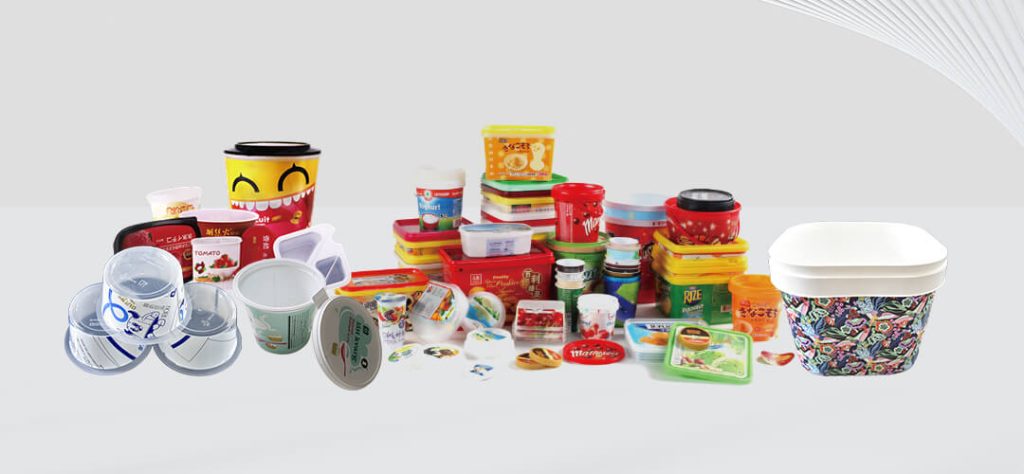
- Tubs for ice cream and yogurt
- Containers for soups, salads, sauces, and pastries
- Ready‑meal trays and snack containers
- Cosmetic tubes
- Sunscreen tubes
- Skincare and cream packaging
- Make‑up and cosmetic product tubes
- Household products
- Cleaning agents and disinfectant bottles
- Laundry detergent containers
- Soap and sanitizer dispensers
- Other home and garden chemical packaging
Across these sectors, in mold labeling is chosen for its ability to combine high‑impact branding, durability, and process efficiency.
Summary: Why Choose In Mold Labeling?
In mold labeling is an innovative packaging and decoration process in which IML labels are integrated into the plastic packaging during manufacturing, rather than applied afterward.
By using in mold labeling, companies can:
- Improve the visual quality and appearance of plastic packaging
- Enhance durability and resistance to moisture, temperature, and abrasion
- Reduce overall production costs for medium and large runs
- Support more sustainable and recyclable packaging designs
- Increase brand protection with built‑in anti‑counterfeiting features
As brands continue to demand better shelf impact and operational efficiency, in mold labeling is becoming an increasingly important packaging solution worldwide.
In Mold Labeling Solutions from IVIROBOT
IVIROBOT, headquartered in China, provides In Mold Labeling (IML) solutions worldwide. Our IML production systems are equipped with 100% quality control, ensuring that in mold labels are printed and converted with exceptional precision and high speed.
If you are looking to upgrade your packaging with professional in mold labeling technology, our engineers can help you:
- Select suitable materials for your IML application
- Optimize container and label design for in mold labeling
- Improve line efficiency and total cost of ownership
Contact our team at ivi-eric@ivirobot.com, and our specialists will help you implement a high‑quality in mold labeling solution tailored to your needs.