
In-mold labeling (In-Mold Labeling, IML) is a marking technology that integrates the label directly into the plastic molding process. It is widely used in food and beverage, automotive, personal care, beauty, and other industries, especially for plastic products that require permanent, durable, and visually appealing decoration.
Compared with traditional post-molding labeling, IML not only enables permanent labels, but also offers durability, design flexibility, relatively lower overall cost, and better support for sustainable design. For engineers and manufacturers working with injection molding or blow molding, understanding IML in a systematic way can significantly improve both the appearance and functional performance of plastic products.
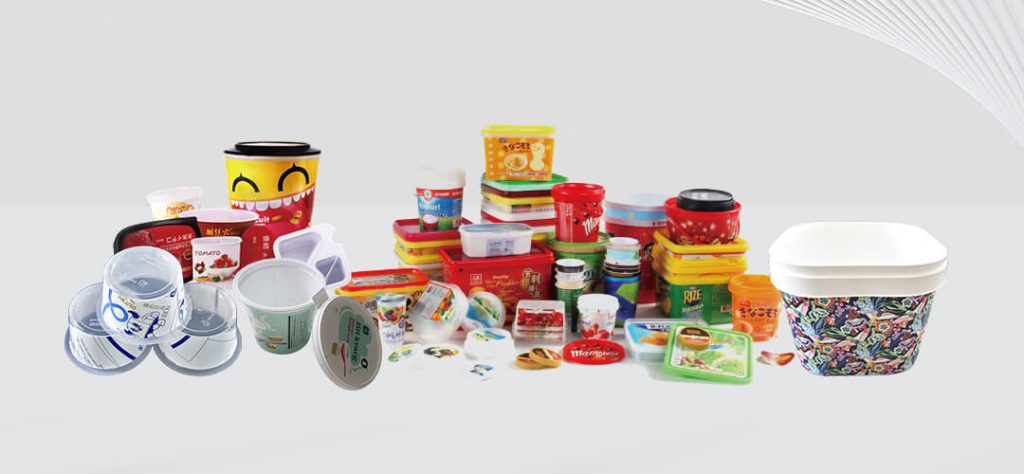
This article, under the theme of “What is in mold labeling?”, will systematically introduce:
- What IML is and how it works
- Key process steps of IML
- Three main IML processes (injection, blow, thermoforming)
- Advantages and limitations of IML
- Typical IML applications in different industries
- Comparison between IML and other common labeling methods
Finally, we will also introduce how IVIROBOT can provide you with integrated IML solutions and production support.
1. What Is In-Mold Labeling (IML)?
In-mold labeling is a process in which a pre-printed label is placed inside the mold cavity before plastic molding. When molten plastic is formed by injection, blow molding, or thermoforming, the label fuses with the plastic surface during molding and cooling. As a result, the product that comes out of the mold already has a permanent, durable label decoration.
Taking injection IML as an example, the process is roughly as follows:
- Place the pre-printed label accurately in the designated position of the mold cavity.
- Inject molten plastic into the mold cavity.
- Under high temperature and pressure, the plastic and the label surface form a strong bond.
- After cooling and solidification, open the mold and eject the product; the label has been fully integrated into the plastic surface.
Because the label is “embedded” into the part surface during molding—rather than stuck on afterward—it is very difficult to peel off, crack, or fade, even in harsh service environments. This is one of the main reasons why IML is widely used in automotive, home care/laundry, and personal care products, where high durability is critical. At the same time, label placement can usually be highly automated, which greatly increases productivity and reduces labor and downstream labeling costs.
2. Working Principle of In-Mold Labeling
The core idea of IML can be summarized as: place the label into the mold first, then use the molding process to fuse the plastic and label into one. To achieve high efficiency and high quality in IML production, every step from pre-production to final inspection must be well controlled.
Overall Process Stages
IML generally consists of three main stages:
- Pre-production
- Molding & labeling – the core stage
- Post-production
Although molding and labeling is the central step of the process, both pre-production and post-production are equally important for final product quality.
3. Pre-Production Steps
Pre-production includes all planning and preparation carried out by the manufacturer or designer before molding and labeling. These tasks directly affect material compatibility, label positioning accuracy, mold and equipment settings, and overall product quality. Key aspects include:
3.1 Label Material Selection
Choosing the right label material is fundamental to IML success. The material must:
- Withstand the high temperature and pressure of the molding process
- Adapt to the actual service environment of the product (chemicals, humidity, UV exposure, etc.)
Common IML label substrates include:
- Polypropylene (PP)
- Polyethylene (PE)
They typically offer:
- Good chemical and moisture resistance
- Excellent UV resistance
- Various thicknesses and sizes to fit different product designs
Additional factors to consider:
- Ink adhesion and compatibility
- Appearance (glossy, matte, metallic effects, etc.)
- Surface finishes and texture
- Transparency or opacity
- Fit with the product’s geometry and functional requirements
In addition, labels can also be made using:
- Paper with adhesive backing (IMPL, In-Mold Paper Labeling)
- Plastic film transfer (IMT, In-Mold Transfer)
to achieve different visual and tactile effects.
3.2 Label Artwork and Layout Design
A good IML label design should meet three criteria:
- Visual appeal: aligned with the brand image
- Dimensional and contour fit: matched to the actual label size and product geometry
- Functionality: clear, legible, durable information that meets regulatory and safety requirements
When designing, you should also ensure:
- Compatibility with the chosen label material and printing process
- Compliance with process constraints of the specific molding method (injection, blow, thermoforming)
- Correct positioning of brand logos, key text, barcodes/QR codes, safety information, etc. on the final product
A well-designed IML label not only enhances product visual appeal, but also significantly strengthens brand recognition.
3.3 Ink Selection
The ink used for label printing should:
- Withstand the high temperature and pressure during molding
- Have strong adhesion to the label substrate to avoid smudging, blistering, or delamination during molding
- Provide good weather and chemical resistance, preventing long-term color fading
Selecting a suitable ink system (such as UV-curable or solvent-based) and curing method is critical to maintaining long-term color and image quality.
4. Molding & Labeling Process (Core Stage)
Molding and labeling is the core stage of the IML process. It generally includes:
4.1 Label Placement
The printed label must be placed accurately into the mold cavity:
- Position and orientation must be highly precise.
- Labels can be fixed by static charge, vacuum, mechanical pins, or air flow, etc.
Accurate placement ensures:
- Sufficient contact/bonding area between the label and plastic
- Reduced risk of wrinkles, bubbles, edge lifting, or misalignment
4.2 Injection/Forming
Once the label is correctly positioned, plastic molding can proceed. The three common molding methods are:
- Injection molding
- Blow molding
- Thermoforming
Each method has its own specific requirements for:
- Mold design
- Temperature and pressure settings
- Cycle time and cooling conditions
These will be explained in more detail in later sections.
4.3 Cooling and Demolding
During cooling:
- The molten plastic gradually solidifies and the label is firmly “locked” to the product surface.
- The shrinkage behavior of the plastic and the physical properties of the label film together determine the final appearance and bond strength.
After cooling:
- The mold opens
- The part is ejected automatically or mechanically
- The finished part already has a permanent label and usually requires no further labeling operations.
5. Post-Production Steps
Post-production focuses on quality, stability, and compliance with specifications, including:
- Removing flash, gates, and excess material
- Sorting parts and preparing them for downstream assembly
- Packaging and warehousing as required
Quality control may involve:
- Visual inspection: wrinkles, bubbles, color inconsistencies, misalignment, etc.
- Dimensional inspection
- Mechanical tests: impact resistance, abrasion resistance, peel strength, etc.
The goal is to ensure that IML products meet the set standards in terms of accuracy, surface finish, durability, and brand presentation.
6. Main Types of In-Mold Labeling Processes
Although IML is most commonly used with injection molding, it can also be applied to other molding processes. The three main IML processes are:
- Injection IML
- Blow IML
- Thermoforming IML
6.1 Injection IML
Injection molding is currently the most widely used and most recommended IML process.
Typical workflow:
- Use a robot, automatic feeder, or polymer carrier to deliver the label into the mold cavity.
- Fix the label with mechanical structures, vacuum, or air.
- Inject molten plastic into the cavity and fuse it with the label surface under high temperature and pressure.
- After cooling, open the mold and obtain a molded part with a permanent decorative layer.
Injection IML can be combined with:
- Insert molding
- Over-molding
Thanks to its controllable cost, high automation, and short cycle time, injection IML is widely used for:
- Ice cream tubs, yogurt cups, and other food containers
- Computer keyboard keycaps and some enclosures
- Small plastic paint buckets
- Cell phone keys and small housing components
6.2 Blow IML
Blow IML is the second most common IML method after injection IML.
Process overview:
- Heat the plastic and extrude it into a tubular parison.
- Before the parison is inserted, fix the label on the mold cavity.
- Close the mold and use compressed air to expand the hot plastic parison.
- The plastic is blown against the cavity wall and label.
- During cooling, the label fuses with the plastic wall.
Suitable for:
- Various hollow containers (such as detergent bottles, lubricant bottles, some beverage bottles, etc.)
- Specially shaped plastic bottles
Compared with post-applied labels, blow IML labels are more resistant to scratching and chemicals, and adhere more firmly, making them less likely to fall off.
6.3 Thermoforming IML
Thermoforming IML is less common, but it is very effective for producing thin-walled, rigid packaging.
Typical thermoforming steps:
- Heating: Heat the thermoplastic sheet until it softens and becomes stretchable.
- Forming: Use vacuum or mechanical pressing to pull the sheet tightly against the mold cavity surface.
- Trimming: Remove excess material around the formed part.
In thermoforming IML:
- The label is pre-inserted into the mold before forming.
- When the softened sheet is drawn or pressed onto the cavity, it comes into close contact with the label.
- After cooling, the sheet and label fuse together to form a fully decorated part.
Typical applications:
- Rigid cups, bowls, boxes, trays, and lids
- Blister packs and clear clamshell packaging
- Thin-walled packaging in food, medical, and retail industries requiring high-quality graphics
7. Value and Advantages of IML
IML has rapidly gained popularity across many industries, mainly due to its combined advantages in quality, efficiency, and cost.
7.1 Enhanced Branding and Customization
With IML, manufacturers can:
- Achieve high-resolution, full-color printing
- Easily create product series and switch among multiple designs (changing labels is far easier than changing molds)
- Build more eye-catching shelf presence in competitive markets
This is especially vital for sectors like beverages, snacks, and beauty products, which rely heavily on packaging differentiation.
7.2 Cost Advantages at High Volumes
For medium- and high-volume production, IML often has a lower total cost than traditional labeling because:
- The labeling step is integrated into the molding cycle, eliminating a separate labeling process
- Extra labeling equipment, operators, and repeated handling are reduced
- Overall manufacturing time is shortened and material flow is simplified
Compared with conventional post-molding labeling, IML significantly reduces:
- Labor and equipment investment
- Logistics and in-process handling costs
- Rework and scrap costs due to mislabeling or missing labels
7.3 Durability and Product Lifespan
Because the label and plastic are fused during molding, IML offers:
- A strong, permanent bond
- Labels that are difficult to tear, peel, or crack
- Better resistance to abrasion, chemicals, and the elements
This durability is a major advantage for high-stress applications such as automotive, industrial equipment, and outdoor products.
7.4 Efficiency and Cycle Time
Since IML integrates labeling into injection/blow/thermoforming:
- There is no need for a separate labeling line
- Production rhythm and material flow are simplified
- Manual handling is reduced, lowering the risk of human error
With automation, IML enables:
- Consistent, repeatable quality
- Higher throughput
- Less reliance on manual labor
This helps companies increase capacity and improve cost competitiveness while maintaining product quality.
7.5 Process Versatility and Adaptability
IML is highly versatile:
- Compatible with a variety of plastics (especially PP and PE)
- Suitable for different product shapes, sizes, and geometries
- Capable of offering a range of effects:
- Full-color, photo-quality images
- Clear windows, metallic effects, localized matte/gloss finishes
- Complex layout of patterns and branding elements
This makes it suitable for both mass-market FMCG packaging and premium brand packaging.
7.6 Anti-Counterfeiting Capability
IML also provides powerful tools for brand protection:
- Uses specialized materials and structures that are hard to fake
- Labels are integrated with the product and cannot be removed or replaced without visible damage
IML labels can integrate:
- Holograms and anti-counterfeit foils
- QR codes or serial numbers for traceability and authentication
- Micro text and special inks as covert features
These measures can significantly enhance the anti-counterfeiting level and protect brand reputation and consumer safety.
8. Disadvantages and Limitations of IML
Despite its many advantages, IML is not suitable for every project. Main limitations include:
8.1 Material Compatibility Challenges
IML labels are usually designed for specific plastic systems. If the label material is not compatible with the plastic substrate, problems may occur:
- Label delamination, blistering, warping, or edge lifting
- Poor bond strength, affecting appearance and durability
In such cases, you may need to:
- Change the label material
- Adjust molding parameters (temperature, pressure, cooling rate, etc.)
This increases development time and trial costs.
Label thickness is also critical:
- Too thick: may cause poor fusion, visible steps, or edge lifting.
- Too thin: may compromise print quality and mechanical strength.
Therefore, early-stage material and structural validation is essential.
8.2 Dependence on Specialized Equipment and Expertise
To achieve stable IML mass production, you usually need:
- Specialized label loading/unloading systems (robots, stackers, vacuum systems, etc.)
- Dedicated positioning and suction structures in the mold
- Tight integration with injection/blow/thermoforming machines
At the same time, higher skill levels are required:
- Experience with plastic molding processes
- Understanding of label behavior under heat and pressure
- Ability to optimize parameters and troubleshoot process issues
This means:
- Higher initial equipment and technical investment
- Not all factories have the required scale or capability to adopt IML
8.3 Risk of Label Defects and Misalignment
Common defects include:
- Label wrinkles
- Bubbles or voids
- Edge lifting
- Misalignment, eccentricity, or asymmetry relative to the product geometry
Possible causes:
- Inaccurate label placement
- Uneven cooling or warpage
- Poor control of process parameters
Such defects will:
- Diminish product appearance and perceived quality
- Affect readability and even functionality of printed information (e.g., scales, button icons)
- Lead to scrap or rework, increasing production cost
Products with high label positioning accuracy requirements (such as measuring cup scales, control panel symbols) need special attention.
9. Application Fields of In-Mold Labeling
Thanks to its high efficiency, quality, and customization, IML plays a key role in many industries.
9.1 Food and Beverage Packaging
Typical applications:
- Yogurt cups, ice cream tubs, ready-meal bowls/boxes
- Beverage bottles and caps
- Trays and lids for prepared and frozen foods
Advantages of IML here:
- Photo-quality images and high-quality text
- Patterns that resist fading, low temperatures, and moisture
- Strong, durable labels suitable for transportation and cold chain logistics
9.2 Medical and Healthcare Products
In medical and healthcare, IML is used for:
- Inhaler and spray inhaler housings
- Syringes, vials, dosage devices
- Equipment housings and control panels
Benefits include:
- Meeting requirements for sterility, disinfection resistance, and tamper evidence
- Providing clear marking of dosage, expiry dates, batch numbers, and scales
- Supporting anti-tamper, anti-counterfeit, and traceability functions
9.3 Automotive and Industrial Components
Common use cases:
- Instrument panels and interior trim
- Functional buttons, knobs, and control interfaces
- Exterior trims and functional plastic parts
IML provides:
- Good resistance to temperature cycles, UV exposure, and chemical cleaners
- Integrated branding and functional icons
- In some cases, a more economical and reliable solution than painting and post-applied labels
9.4 Consumer Goods
IML is used extensively in consumer goods, including:
- Food packaging, condiment bottles, snack containers
- Cosmetic and skincare bottles and jars
- Household cleaners, laundry detergents, fabric softeners
- Shampoo, body wash, and other personal care packaging
Benefits:
- Maintains good appearance and adhesion in humid or complex environments
- Provides clear brand, ingredient, usage, and safety information
- Helps consumers quickly identify and correctly use the product
10. IML vs. Other Labeling Methods
To decide whether to adopt IML, it is important to compare it with other common labeling methods.
10.1 Pressure Sensitive Labels (PSL)
Process: Self-adhesive labels applied directly to the product surface.
- Durability:
- PSL is more susceptible to wear, humidity, and temperature changes.
- IML is more durable and less likely to fall off.
- Customization:
- Both can support diverse designs, but IML is better suited for premium, complex, and fully integrated visual designs.
- Cost:
- Due to process complexity and equipment/mold requirements, IML usually has a higher per-part cost.
- PSL is more suitable for small batches or cost-sensitive projects.
Conclusion:
- If your product demands high durability and premium look, IML is preferable.
- If flexibility, small volume, and low cost are key, PSL is often a better choice.
10.2 Shrink Sleeve Labels
Process: Printed film sleeves are placed over the product and then shrunk with heat to conform to its shape.
- Appearance:
- Shrink sleeves provide 360° full coverage, delivering strong visual impact.
- IML usually decorates specific flat or curved zones.
- Durability:
- IML generally offers higher scratch and long-term wear resistance.
- Production:
- Shrink sleeves require extra post-molding operations, increasing process time and complexity.
- IML integrates labeling into the molding cycle, which is better for automation and cycle control.
- Recyclability:
- Shrink sleeves often use multiple materials, complicating recycling.
- IML can usually be designed as mono-material with the container, improving recyclability.
Use Cases:
- Shrink sleeves are ideal for complex bottle shapes and full 360° coverage, especially in low-to-medium volumes.
- IML suits high-volume, durability-focused applications aiming to simplify processes.
10.3 Wet Glue Labels
Process: Apply labels to the product surface using liquid adhesive.
- Print quality: Both wet glue and IML can deliver high-quality printing.
- Durability:
- Wet glue labels are more likely to curl, peel, or fade in humid or thermal cycling environments.
- IML is more stable and longer lasting.
Wet glue labels are commonly used on glass bottles and metal cans, whereas for plastic products—especially those needing durable labeling—IML is usually the better solution.
10.4 Heat Transfer Labels
Process: Graphics are printed on transfer paper/film and then transferred to the product surface by heat and pressure.
- Appearance:
- Vivid colors and sharp images can be achieved.
- Durability:
- Overall good, but more prone to long-term fading or discoloration than IML.
- Environmental impact:
- The multi-layer structure (adhesives + plastic + inks) complicates recycling.
IML generally performs better in mono-material recyclability and long-term weather resistance.
10.5 Direct Print Labels
Process: Graphics are printed directly on the product surface, without a separate label substrate.
- Design flexibility: Very high.
- Durability: Good, but long-term color fading or discoloration may still occur.
- Sustainability:
- Typically uses less material than IML and requires no separate label substrate, which can be advantageous for environmental goals in some applications.
Compared with IML, direct printing offers advantages in material usage and process simplicity, but generally provides less mechanical protection against abrasion and impact than an embedded label.
11. Is IML Right for Your Project?
IML is particularly suitable for projects that require:
- Permanent, durable labels
- Highly customized, high-quality graphics
- High production efficiency and automation
- Improved recyclability and sustainability through integrated design
However, it also involves:
- Higher upfront investment in equipment and molds
- Greater demands on engineering and process expertise
- Systematic validation of material compatibility and process windows
When evaluating IML, you should consider:
- Product lifespan and use environment
- Expected production volume and total life-cycle output
- Brand and appearance quality requirements
- Target cost and return on investment
- Recycling and environmental goals
If your product needs long service life, premium appearance, and strong branding, and you plan for medium to large production volumes, IML is often a very attractive option.
12. IML Services Provided by IVIROBOT
If you are evaluating in-mold labeling solutions for a new or existing product, IVIROBOT can provide end-to-end support—from design through to mass production.
At IVIROBOT, we offer plastic manufacturing services capable of integrating in-mold labeling, primarily including:
- Injection IML (injection molding with in-mold labels)
You can work with our engineering team to:
- Select IML label substrates and constructions
- Design and modify molds suitable for IML
- Optimize process windows and parameters (temperature, pressure, cycle time, etc.)
- Balance branding effect, durability, cost, and sustainability
If you are unsure whether IML is suitable for your specific project, or you need to evaluate process feasibility and cost structure, feel free to contact the technical team at IVIROBOT. We will provide professional in-mold labeling solutions and recommendations tailored to your product requirements.